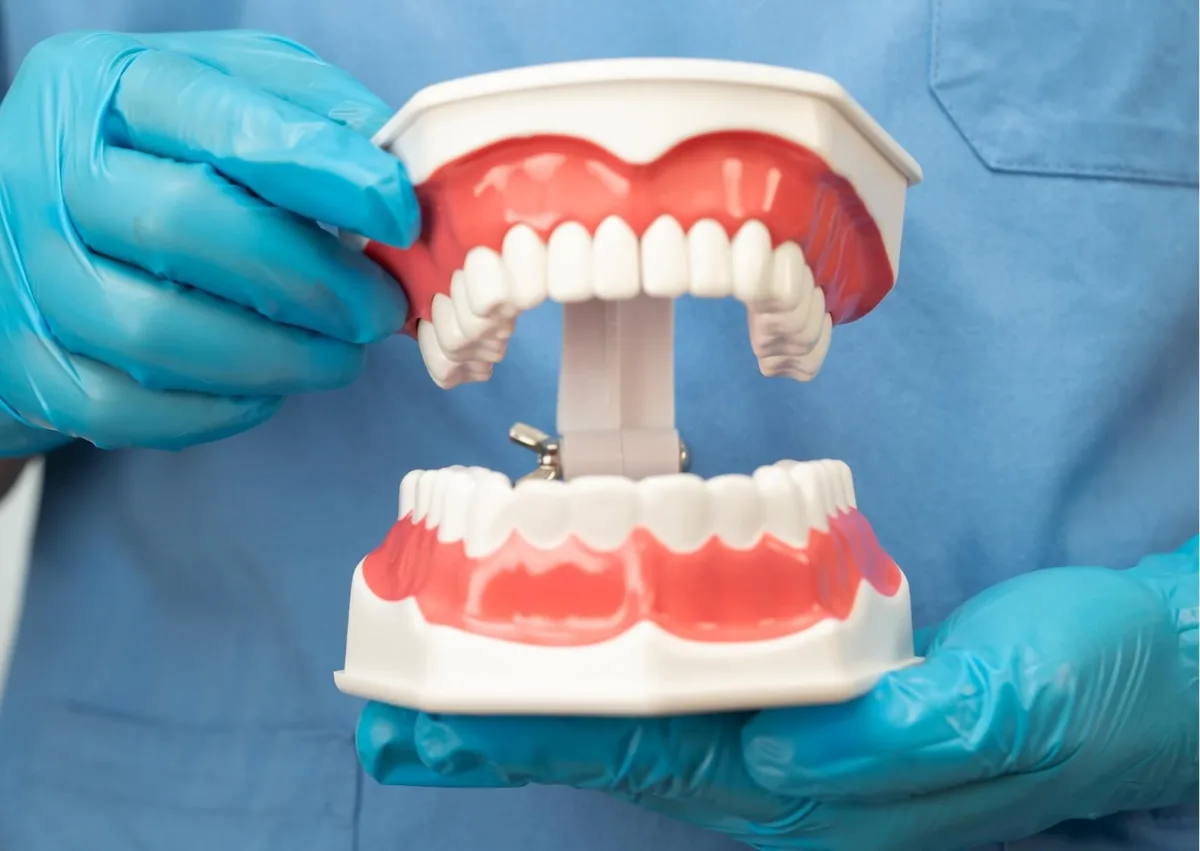
Most adults have 32 permanent teeth, including four wisdom teeth, while children usually have 20 baby teeth. Many adults have 28 teeth instead if wisdom teeth never develop or have been removed, and the total can also vary because of missing, extra, or impacted teeth.
If you’re worried about delayed, missing, or painful teeth, a dental exams & cleanings visit can help identify what is normal and what needs attention. At Dulce Dental in Dallas, TX, this exam can clarify tooth development, oral health, and practical next steps.
Children usually develop 20 primary teeth, with 10 in the upper jaw and 10 in the lower jaw. These teeth often begin to appear around 6 months of age, although some variation is normal.
Permanent teeth usually start replacing baby teeth around age 6. By the early teen years, most people have 28 permanent teeth, and wisdom teeth may bring the total to 32 in the late teens or early adulthood.
Eruption charts can help show typical timing, but tooth eruption varies from person to person. If you want to know how long a wisdom tooth come in once it starts, our guide explains the usual timeline.
A dentist can examine the mouth and, when needed, use X-rays to see whether teeth are developing normally or are still below the gums. For infants and children, visits for pediatric dentistry can help families track eruption and get age-appropriate guidance (see kid friendly dentistry).
A full adult set of 32 permanent teeth includes:
Without wisdom teeth, the usual adult count is 28. In each quarter of the mouth, that means two incisors, one canine, two premolars, and two molars.
Some people are born without one or more permanent teeth, a condition called hypodontia. Others develop extra teeth, called supernumerary teeth, which may erupt into the mouth or stay hidden in the jaw.
A tooth may also be impacted, which means it cannot fully erupt because of limited space, its position, or a blockage. This is common with wisdom teeth, so the number of visible teeth does not always match the number of teeth that have developed.
Adults may also have fewer teeth because of decay, gum disease, injury, orthodontic treatment, or planned extractions. In children, losing baby teeth is expected, but a loose or missing permanent tooth should be checked by a dentist.
Wisdom teeth are the third molars at the very back of the mouth. Some people develop all four, some develop fewer, and some never develop them at all.
Wisdom teeth do not always need to be removed. A dentist may recommend monitoring or wisdom teeth removal if the teeth are impacted, hard to clean, damaging a nearby tooth, causing gum infection, or linked to a cyst or another problem.
If you want more detail about when treatment may be needed, see our guide on having wisdom teeth extracted.
Brush twice a day with fluoride toothpaste and clean between your teeth every day. Regular dental exams & cleanings also help catch problems early.
Limiting sugary foods and drinks can lower the risk of cavities. Wearing a mouthguard during contact sports can also help prevent dental injuries.
Tooth count alone does not determine oral health. Healthy gums, stable teeth, a comfortable bite, and treatment of active problems matter more than matching the standard number.
For more day-to-day guidance, see these oral care recommendations.

Schedule a dental visit if a permanent tooth seems delayed, a tooth becomes unexpectedly loose, or you have ongoing pain, swelling, bleeding, or trouble chewing. It is also a good idea to get checked if a tooth is coming in sideways, a new gap appears, or you are unsure whether wisdom teeth are present.
Seek urgent dental or medical care for rapidly worsening facial swelling, fever with dental pain, uncontrolled bleeding, major facial trauma, or trouble swallowing or breathing. A dentist can confirm how many teeth are present, whether any are impacted, and whether treatment is needed.
For routine assessment or concerns about missing or painful teeth, an exam can confirm tooth development and outline needed care. Dulce Dental provides dental exams & cleanings in Dallas, TX and welcomes patients from West Dallas and Oak Cliff; call (214) 337-0153 or book online to arrange a visit.
No. Many adults have 28 teeth without wisdom teeth, while others have up to 32 when all four wisdom teeth are present. Extractions, tooth loss, and natural differences in development can change the total.
Children typically have 20 primary teeth. These are gradually replaced by permanent teeth, usually starting around age 6.
Yes. The standard adult total of 32 includes four wisdom teeth. A count of 28 does not include them.
Yes, although it is uncommon. Extra teeth may erupt into the mouth or only be found on a dental X-ray.
Not necessarily. Wisdom teeth may never develop, and baby teeth normally fall out, but an unexplained missing or loose permanent tooth should be evaluated by a dentist. For long-term replacement of missing teeth, dental implants may be an option when appropriate.