Dental implants often last 20 years or longer with good oral health and regular dental care, and many remain functional for a lifetime. The implant post usually lasts longer than the visible crown, which commonly needs replacement after about 10 to 15 years depending on wear, materials, bite forces, and daily habits.
If you are replacing a missing tooth or worried that a restoration may not hold up, dental implants can be a durable long-term option worth understanding. Dulce Dental in Dallas, TX helps patients compare implant parts, expected lifespan, and practical care needs so you can make an informed decision for your smile.
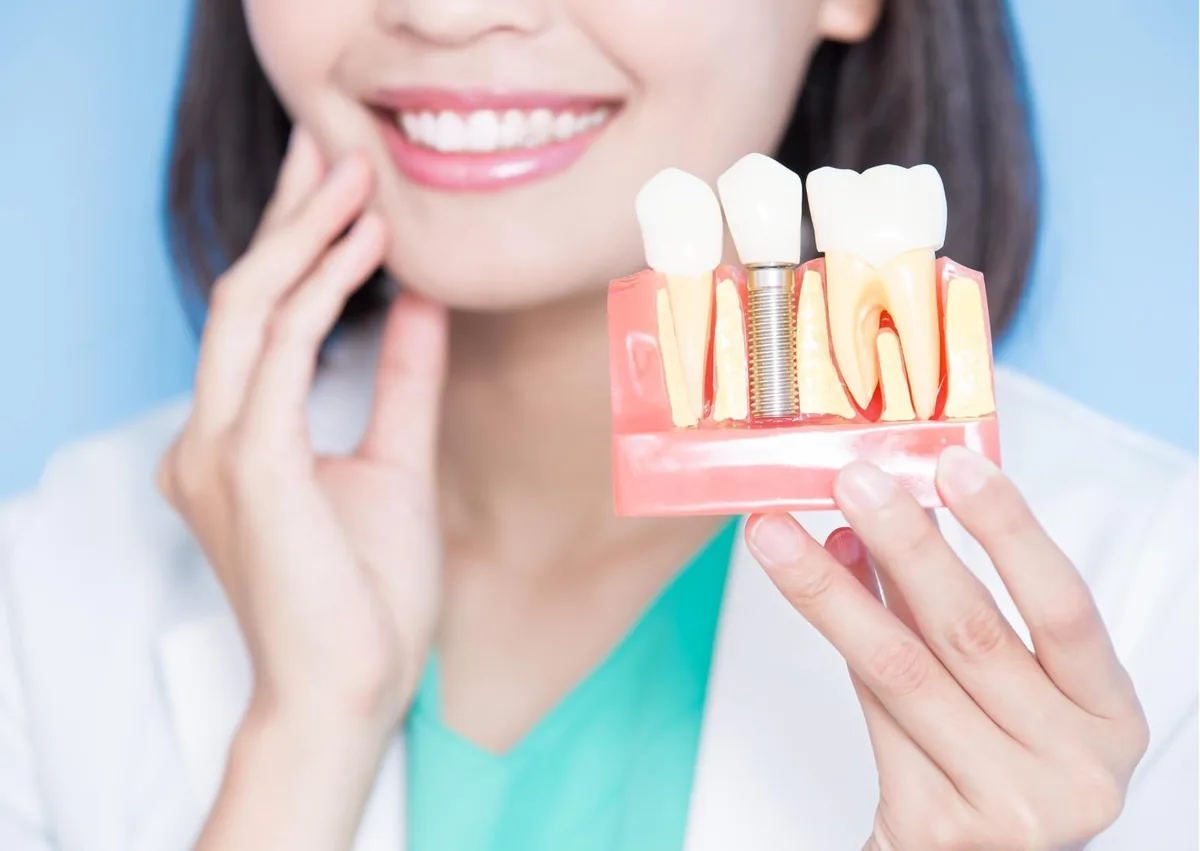
A dental implant restoration has three main parts. The implant is the titanium or ceramic post placed in the jawbone, the abutment connects the post to the replacement tooth, and the crown is the visible part used for chewing.
The implant post can last a very long time because the jawbone bonds closely around it through osseointegration. The crown, however, takes daily chewing pressure and may eventually chip, loosen, or wear down.
An abutment screw can also loosen or fracture in some cases. Replacing a crown does not automatically mean replacing the implant, and if the post is stable and the surrounding bone and gums are healthy, a dentist may be able to restore the existing dental implants.
The long-term success of an implant depends heavily on the health of the bone and gums around it. Plaque buildup can lead to peri-implant mucositis, and if that inflammation progresses to peri-implantitis, bone loss can threaten the implant's support.
If bone loss is significant, a clinician may recommend bone grafting to rebuild support before placing or restoring an implant. Early treatment matters because bone loss around implants may not cause obvious pain at first.
Smoking or vaping nicotine, uncontrolled diabetes, untreated gum disease, and inconsistent oral hygiene can all raise the risk of complications. A history of radiation to the jaw, certain medical conditions, and some medications that affect bone healing can also influence outcomes.
Bite forces matter too. Teeth grinding, clenching, chewing ice, or biting hard objects can overload the crown or implant components and shorten how long they last.
Implant position and treatment planning also affect durability. Back teeth usually handle stronger chewing forces than front teeth, so crowns in those areas may wear faster.
Brush twice a day with a soft-bristled toothbrush and clean around the implant every day. Floss or other tools recommended by your dental professional can help remove plaque, and implant-supported bridges may require floss threaders or small interdental brushes.
Regular dental exams & cleanings help your dental team spot early inflammation and protect the tissues supporting the implant. For more daily care tips, see these oral care recommendations.
Keep up with routine dental visits based on your personal risk factors. These appointments let your dentist check the gums, bite, crown, and implant stability and use X-rays when clinically appropriate to monitor the supporting bone.
Avoid chewing ice, opening packages with your teeth, or repeatedly biting hard objects. If grinding or clenching is damaging the restoration, a dentist may recommend a custom nightguard.
Managing gum disease, blood sugar, and nicotine use can also support long-term implant health. If gum inflammation is a concern, learn more about how to treat gum disease.
An implant cannot get a cavity, but the gums and bone around it still need ongoing care. Daily cleaning and regular monitoring are what help protect its long-term support.
A healthy implant should feel stable when you eat and clean around it. Contact a dentist promptly if you notice movement, a change in your bite, recurring bleeding, swelling, gum recession, persistent tenderness, drainage, a bad taste, or trouble chewing.
Some problems involve only the crown or abutment. If the implant post itself feels loose, that can suggest loss of support and should be evaluated as soon as possible.
Do not keep chewing on a loose restoration or try to tighten, glue, or remove it at home. Early treatment may allow your dentist to address inflammation, bite overload, or a damaged component before the problem becomes more extensive.
Seek urgent dental care for rapidly increasing facial swelling, severe or worsening pain, fever with dental swelling, or uncontrolled bleeding. Trouble breathing or swallowing, or swelling spreading toward the eye or neck, requires emergency medical care.
To discuss replacement options or address concerns about an implant, contact our team for a personalized evaluation and treatment plan. Dulce Dental offers dental implants in Dallas, TX and nearby West Dallas and Oak Cliff; call (214) 337-0153 to schedule.
Yes, an implant post can last a lifetime, but no restoration has a guaranteed lifespan. Gum inflammation, bone loss, heavy bite forces, trauma, health changes, and component wear can all affect how long it stays functional.
Implant crowns commonly last about 10 to 15 years, but some need replacement sooner and others last much longer. Wear, material, implant location, grinding, oral hygiene, and bite forces all affect timing.
Possible signs include looseness, pain when biting, swelling, bleeding, pus, gum recession, or an ongoing bad taste. Because these symptoms can have several causes, a dental exam and sometimes X-rays are needed to find the cause.
The implant and crown cannot decay like natural tooth structure. Plaque can still inflame the surrounding gums and contribute to bone loss, so brushing, cleaning between teeth, and professional maintenance are still necessary.