A cavity usually takes months to years to form, not just a few days. The exact timeline depends on how often teeth are exposed to sugar and acid, how well plaque is removed, saliva flow, fluoride exposure, and whether the tooth is already vulnerable.
Early decay may sometimes be stopped or remineralized before a true hole forms. Once the tooth surface breaks down into a cavity, it usually needs treatment from a dentist.
If you're worried about early tooth decay or unexplained sensitivity, a routine dental exam and cleanings visit can identify problems before a cavity needs a filling. Dulce Dental in Dallas, TX helps patients protect enamel and reduce future treatment by checking for early decay and removing buildup during those preventive visits.
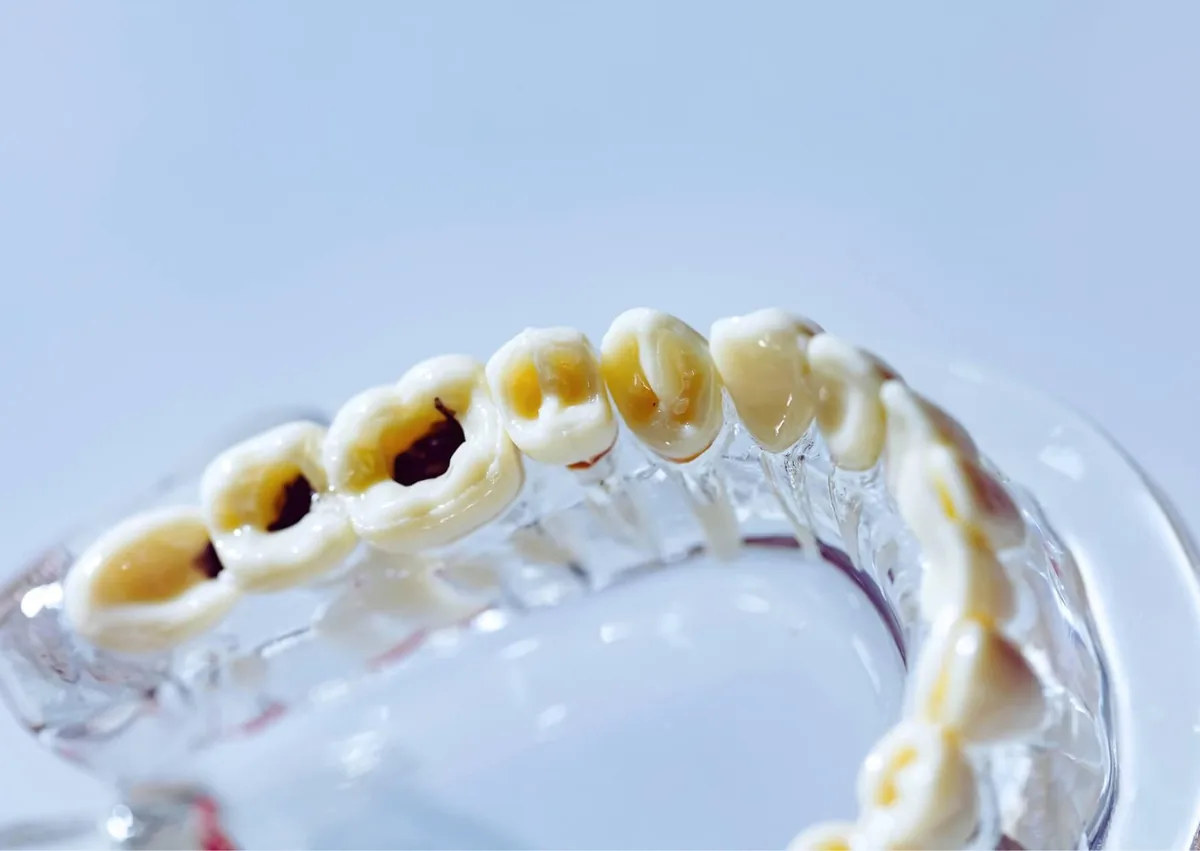
A cavity does not appear all at once. Tooth decay starts when bacteria in plaque feed on sugars and starches and produce acids that pull minerals out of enamel.
Saliva and fluoride can help repair some of that early damage between acid attacks. If mineral loss keeps happening faster than repair, the enamel weakens and can eventually collapse into a cavity.
|
Stage |
What Is Happening |
General Expectation |
|---|---|---|
|
Early mineral loss |
Enamel loses minerals, sometimes causing a chalky white spot |
May develop over months or longer and can sometimes be reversed |
|
Enamel decay |
Damage moves deeper into the enamel |
Often progresses without pain |
|
Dentin decay |
Decay reaches the softer layer under enamel |
May spread faster and cause sensitivity |
|
Pulp involvement |
Decay nears or enters the nerve and blood supply |
Can cause ongoing pain, infection, or an abscess |
These are general patterns, not exact deadlines. A dentist can assess the stage during dental exams and cleanings and may use dental X-rays when needed.
How often teeth face sugar or acid matters as much as the total amount. Sipping soda, juice, sports drinks, or sweetened coffee throughout the day keeps the mouth acidic and gives enamel less time to recover.
A cavity may form faster with:
Children's baby teeth have thinner enamel than adult teeth, so decay can reach deeper layers sooner. Newly erupted permanent teeth and teeth with weakened enamel may also be at higher risk.
Yes. A new cavity can become detectable between routine visits, especially if risk factors increase or an early weak spot progresses.
Many cavities do not hurt at first. Bitewing X-rays can help find decay between teeth, but whether they are needed depends on age, symptoms, dental history, and cavity risk.
Early decay often causes no symptoms at all. That is why a tooth can look and feel mostly normal even when damage has started.
As decay gets worse, symptoms may include:
These symptoms are not unique to cavities. Cracked teeth, gum recession, enamel wear, and other dental problems can cause similar changes, so an exam is needed to confirm the cause.
There is no single timeline that fits everyone. In a low-risk mouth with good saliva flow, fluoride use, and regular plaque removal, early decay may stay stable for a long time or even improve.
In a high-risk situation, decay can move faster once it reaches dentin because dentin is softer than enamel. That is one reason early detection matters.
An early enamel lesion that has not formed a hole may sometimes be reversed. Fluoride treatments, good plaque removal, healthy saliva flow, and fewer sugar or acid exposures can help minerals return to the weakened area.
A dentist may also recommend prescription-strength fluoride or other preventive steps for someone with higher cavity risk. A cavitated tooth cannot grow back, so tooth-colored fillings or another restoration is usually needed once the surface has broken down.
If decay reaches the nerve, treatment becomes more involved. Depending on the damage, care may include a crown, root canal treatment, or removal of a tooth that cannot be restored.

Brush twice a day with fluoride toothpaste and clean between the teeth daily. After brushing, spit out the extra toothpaste and avoid rinsing right away so fluoride can stay on the teeth longer. See our oral care recommendations for more details.
Try to reduce how often teeth are exposed to sugar and acid, especially between meals and before bed. Water is the safest everyday drink, and sugar-free gum may help support saliva flow for some people.
Keep regular dental visits based on your risk level, not just a fixed schedule. A dentist may recommend fluoride varnish, dental sealants, dry-mouth care, or closer monitoring if you are more likely to develop cavities.
Schedule a dental visit for new sensitivity, pain when chewing, a visible hole or spot, a broken tooth, or symptoms that do not improve. Early treatment is often simpler and helps preserve more natural tooth structure.
Get prompt dental care for severe tooth pain, swelling, pus, a bad taste coming from a painful tooth, or fever. Facial or neck swelling, trouble breathing or swallowing, confusion, or swelling near the eye requires urgent medical attention because a dental infection may be spreading.
Symptoms alone cannot show exactly how fast a cavity is forming. A dentist can tell whether the area is early mineral loss, a true cavity, or another dental problem and explain the next step.
If you notice new sensitivity, pain, or a visible spot, arrange a professional check so early decay can be treated before it needs a larger restoration. Dulce Dental focuses on dental exams and cleanings in Dallas, TX and serves nearby West Dallas and Cockrell Hill; call (214) 337-0153 or schedule a visit to get evaluated.
A fully developed cavity is less likely to form in only a few weeks in a healthy adult tooth, but fast progression can happen in high-risk conditions. It can also seem sudden when decay was already present but had not caused symptoms yet.
There is no safe waiting period that applies to everyone. Some cavities move slowly, while others reach dentin or the nerve faster, so suspected decay should be checked rather than watched without dental guidance.
No. Enamel has no nerves, so early cavities often do not hurt. Pain or sensitivity may not start until decay reaches deeper layers.
Brushing with fluoride toothpaste may help reverse early mineral loss before a hole forms. It cannot repair a cavity once the tooth surface has broken down.
A dentist can often estimate whether decay looks early, active, advanced, or slow-moving, but usually cannot assign an exact age. Current and older X-rays may help show how much an area has changed over time.