Most canker sores last 7 to 14 days and heal on their own without scarring. Pain is often worst in the first few days, then gradually improves, but a sore that is large, worsening, or still present after two to three weeks should be checked by a dentist or medical professional.
If a mouth sore is persistent or unusual, an oral cancer screening can help determine whether further testing is needed. Dulce Dental in Dallas, TX provides focused oral cancer checks and clear, calm guidance for patients concerned about prolonged or atypical mouth ulcers.
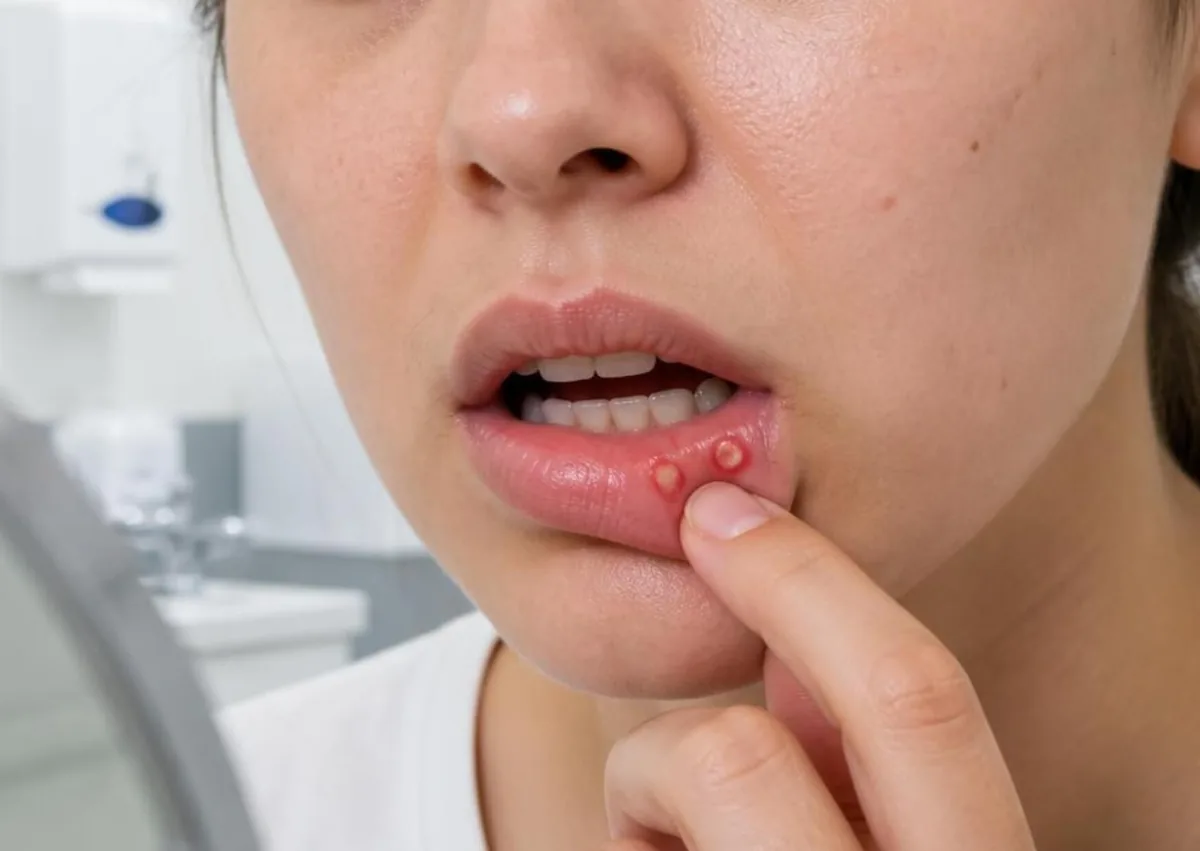
A canker sore, also called an aphthous ulcer, often starts with tingling, burning, or tenderness. Within a day or two, a shallow round or oval sore may appear inside the mouth.
It usually has a white, yellow, or gray center with a red border. Minor canker sores are the most common type and usually heal within two weeks.
|
Stage |
Common Experience |
Typical Timing |
|---|---|---|
|
Early stage |
Tingling, burning, or a small tender spot |
Several hours to 2 days |
|
Most painful stage |
A visible sore that hurts with eating or speaking |
Often days 2 to 5 |
|
Healing stage |
Less pain as the sore gets smaller |
Usually within 1 to 2 weeks |
|
Prolonged course |
A large or severe ulcer heals more slowly |
Several weeks in some cases |
Larger sores, sometimes called major aphthous ulcers, can be deeper, more painful, and slower to heal. These are more likely to last several weeks.
Canker sores form on the soft tissues inside the mouth. Common spots include the inner lips, inner cheeks, under the tongue, the base of the gums, and the soft palate.
They are different from cold sores. Cold sores usually appear on or around the lips, form blisters, and are caused by the herpes simplex virus.
A canker sore may sting or burn, especially with spicy, acidic, salty, or crunchy foods. Typical canker sores are not contagious and do not spread through kissing, shared utensils, or casual contact.
The exact cause is not always clear. Common triggers include accidentally biting your cheek, irritation from braces or a sharp tooth, vigorous brushing, dental work, emotional stress, hormonal changes, or sensitivity to certain foods or oral care products.
Some people get recurrent sores when there is ongoing irritation or an underlying health issue. Repeated episodes can sometimes be linked to low iron, folate, vitamin B12, or zinc levels.
Less often, frequent or severe mouth ulcers may happen with gastrointestinal, immune, or inflammatory conditions. That is why repeated or unusually severe sores deserve professional evaluation.
Home care usually will not make a canker sore disappear overnight. It can, however, reduce irritation and make healing more comfortable.
Avoid spicy, acidic, salty, sharp, or very hot foods while the area is tender. Softer foods may be easier to eat for a few days.
Gentle rinsing with warm salt water or a mild baking soda solution may help soothe the area. A soft-bristled toothbrush, careful brushing, and avoiding alcohol-containing mouthwash can also reduce irritation.
For broader daily hygiene tips, see our oral care recommendations. Over-the-counter protective pastes or mouth-ulcer products may also provide temporary relief.
Follow the product label carefully. Ask a dentist, physician, or pharmacist before using a medicated product if you are pregnant, have a medical condition, take other medicines, or are treating a child.
Do not place aspirin directly on the sore. Do not cut, scrape, or pop the ulcer, since that can worsen pain and delay healing.
Canker sores cannot always be prevented, but it helps to look for patterns. Keep a short record of recent foods, stress, mouth injuries, dental products, and how long each sore lasts.
Use a soft toothbrush and avoid habits that repeatedly injure the lips or cheeks. If braces, a rough filling, a broken tooth, or another sharp surface keeps rubbing the same area, a dentist can correct the source of irritation.
A balanced diet supports normal tissue health. Do not self-treat a suspected deficiency with supplements unless a clinician recommends it.
If sores happen often or come with other symptoms, a health professional may suggest testing for a nutritional deficiency or another underlying issue.

Arrange an evaluation if a sore has not clearly improved within two weeks, stays present beyond three weeks, keeps coming back, is unusually large, or becomes more painful. You should also seek care for multiple ulcers, sores that extend onto the lips, trouble eating or drinking, unexplained weight loss, rash, diarrhea, joint symptoms, fever, or swollen lymph nodes.
If a sore causes severe uncontrolled pain, signs of infection, or difficulty eating or drinking, urgent dental attention such as emergency dentistry may be needed. A dental exam allows a clinician to inspect the sore, look for irritation or other oral disease, and recommend treatment or referral.
Persistent ulcers may need further testing. In some cases, infections, immune disorders, medication reactions, and oral cancer screening concerns are part of the evaluation when a mouth sore looks atypical.
Seek urgent medical care for trouble breathing or swallowing, rapidly increasing swelling, signs of severe dehydration, or a serious allergic reaction. When a mouth ulcer is severe, worsening, persistent, or hard to identify, timely evaluation is the safest choice.
If a mouth sore has not clearly improved within two weeks, arrange an oral cancer screening to rule out unusual tissue changes and get prompt guidance. Dulce Dental offers oral cancer screenings in Dallas and nearby West Dallas and Cockrell Hill; call (214) 337-0153 or schedule an appointment online to speak with the team.
A small sore may feel much better after three days, but full healing usually takes 7 to 14 days. The timeline depends on the sore's size and whether it keeps getting irritated.
A large ulcer, repeated friction, a nutritional deficiency, an underlying health condition, or a sore that is not actually a canker sore can all delay healing. Schedule an exam if it is not clearly improving by two weeks or is still there at three weeks.
No. Typical canker sores are not caused by herpes and do not spread from person to person, although other mouth lesions can be contagious.
A dentist is a good first choice for a persistent mouth sore, especially when irritation from teeth, dental work, or oral disease may be involved. A physician may also be appropriate if the sores happen with fever, digestive symptoms, skin changes, medication concerns, or another possible medical condition.