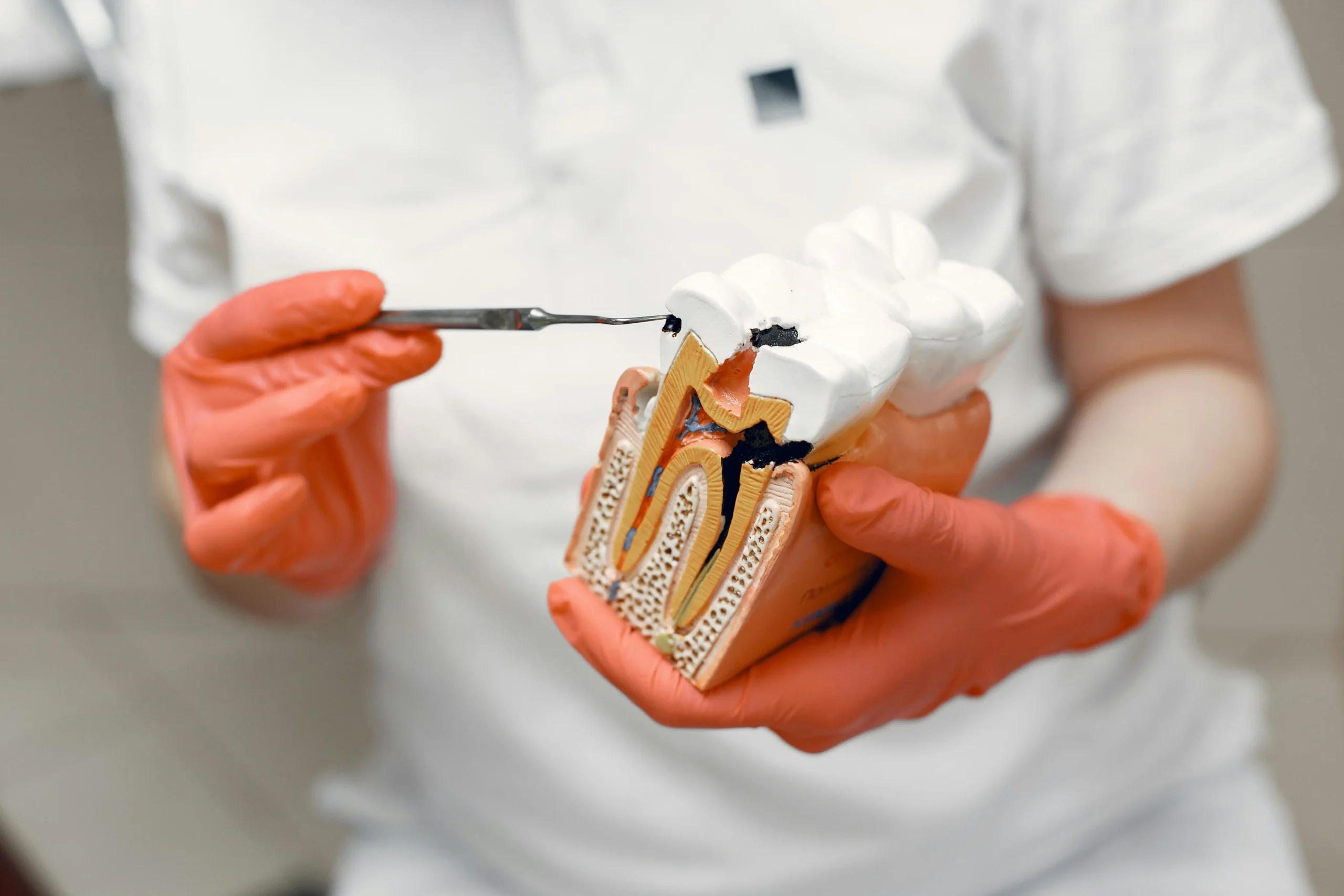
Exposed tooth roots occur when gum tissue recedes and reveals the root surface, making the area more vulnerable to sensitivity, decay, and structural damage. Root surfaces are covered by cementum, which is thinner and less durable than enamel. This condition often develops gradually and may worsen without proper care. At Dulce Dental, exposed roots are evaluated using advanced diagnostics such as CBCT imaging to determine whether the cause is bacterial, mechanical, or structural.
Exposed tooth roots develop when gum recession reduces coverage over the root surface. This may result from infection, repeated mechanical stress, or uneven force distribution.
Common causes include:
Gum disease (periodontitis)
Bacterial infection damages gum attachment and bone support
Example: Plaque buildup progressing into infection requiring deep dental cleaning
Aggressive brushing (mechanical wear)
Excessive force erodes gum margins
Example: Scrubbing motion causing gradual tissue loss
Tooth misalignment (uneven pressure)
Concentrated force affects specific gum areas
Example: Crowded teeth causing localized recession
Teeth grinding or clenching (occlusal stress)
Repeated pressure weakens supporting structures
Example: Night grinding affecting gum stability
Aging-related tissue changes
Gradual thinning of gum tissue
Example: Slow exposure without active disease
If infection is present, plaque and bacteria are addressed first. Mechanical or structural factors are managed through habit changes or alignment correction.
Exposed tooth roots may cause sensitivity and visible changes near the gumline.
Common symptoms include:
If symptoms persist or become localized, professional evaluation is recommended. Supportive care such as sensitive teeth treatment may help reduce discomfort.
Because root surfaces lack enamel, they are more prone to damage.
Potential complications include:
If untreated, protective treatments such as tooth-colored fillings may be needed.
Treatment for exposed tooth roots depends on the cause and severity of gum recession.
Non-Surgical Treatments
Surgical Treatments
Mild cases may respond to non-surgical care, while advanced cases may require surgery.
Exposed roots cannot naturally regain lost gum tissue, but the condition can be stabilized.
Management focuses on:
Advanced imaging allows detailed evaluation of root exposure and supporting structures.
Tools include:
Early detection often allows less invasive treatment.
Preventive care may help reduce the risk of gum recession and root exposure.
Effective strategies include:
Early prevention helps reduce progression.
Early treatment of exposed tooth roots may help limit progression and reduce the need for more complex procedures.
If exposed roots are identified early, then treatment options may be more conservative and easier to manage.
Exposed tooth roots must be distinguished from similar conditions affecting tooth structure and sensitivity.
Accurate diagnosis is essential when symptoms overlap.
Professional evaluation is recommended when symptoms persist or worsen.
Evaluation is recommended if you notice:
Early care may prevent more complex treatment.
Certain factors may increase the likelihood of gum recession and root exposure.
Exposed tooth roots may progress gradually or accelerate depending on the underlying cause.
If contributing factors are not controlled, then progression may continue and increase treatment complexity.
With proper care, exposed tooth roots can remain stable over time.
Daily habits may directly influence gum health and the progression of root exposure.
Early habit correction helps slow progression.
Are exposed tooth roots serious?
They may increase the risk of decay, sensitivity, and structural damage.
Can sensitivity go away?
It may improve with treatment, but exposure typically remains.
Do exposed roots always mean gum disease?
No, they may also result from brushing habits or structural factors.
When is surgery needed?
When recession is severe or continues progressing.
Exposed tooth roots often result from plaque buildup, mechanical stress, or structural imbalance affecting gum support. These factors may gradually impact both gum tissue and bone before symptoms become obvious.
If you are noticing tooth sensitivity, visible gum changes, or discomfort near the gumline, these signs may indicate early or progressing root exposure. If this applies, identifying the cause helps determine whether preventive care or corrective treatment is appropriate.
You can request a consultation with Dulce Dental to evaluate gum health, assess structural risk using advanced imaging, and determine a personalized approach based on the cause and severity of your condition.